4. Accessibility
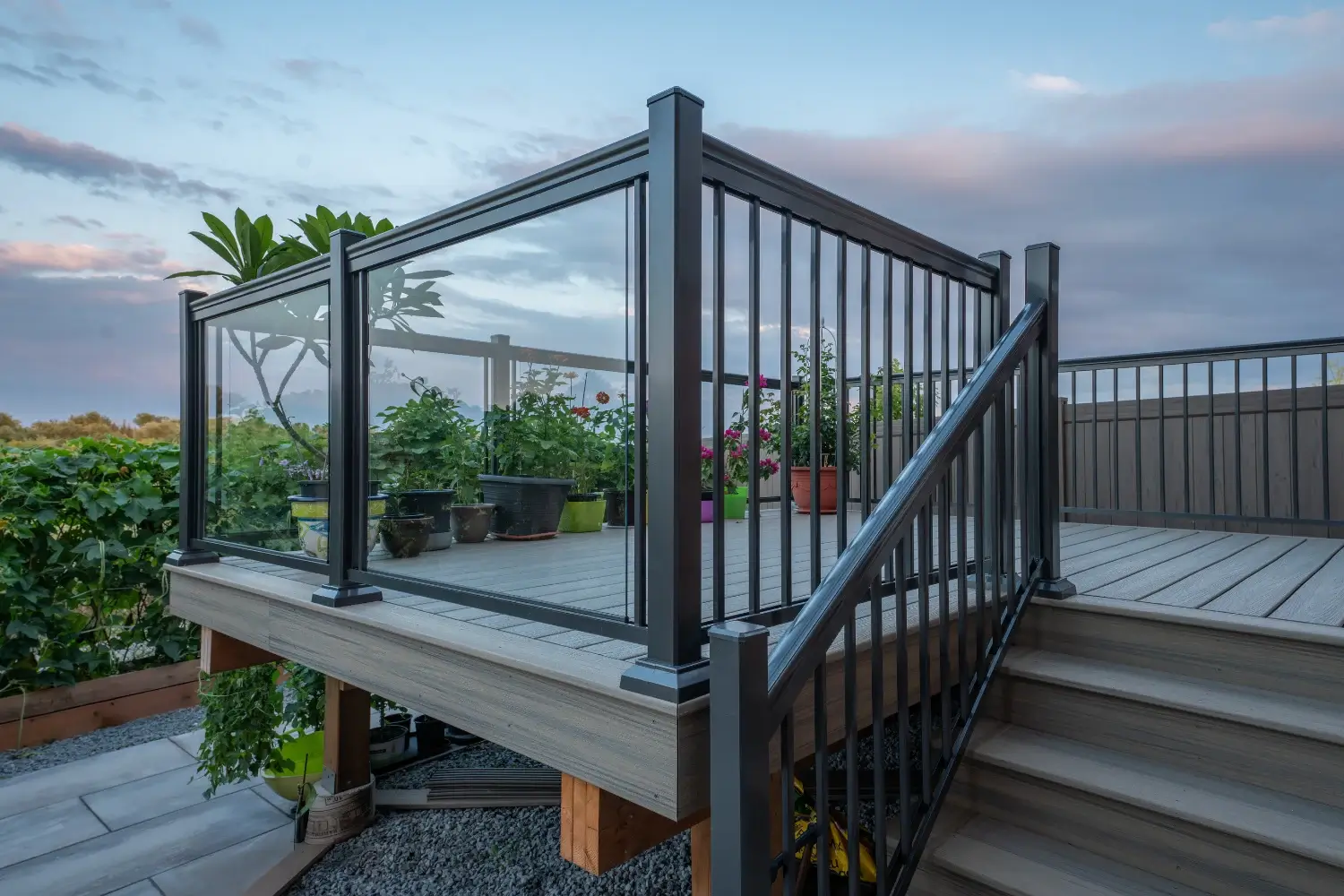
Installing glass railings at heights, such as upper balconies or rooftop terraces, requires added safety measures. Note that scaffolding, lift equipment, and other fall-protection systems may increase the setup time and labour complexity. Ground-level installations are generally easier and cost less.
5. Railing Design, Complexity, and Layout
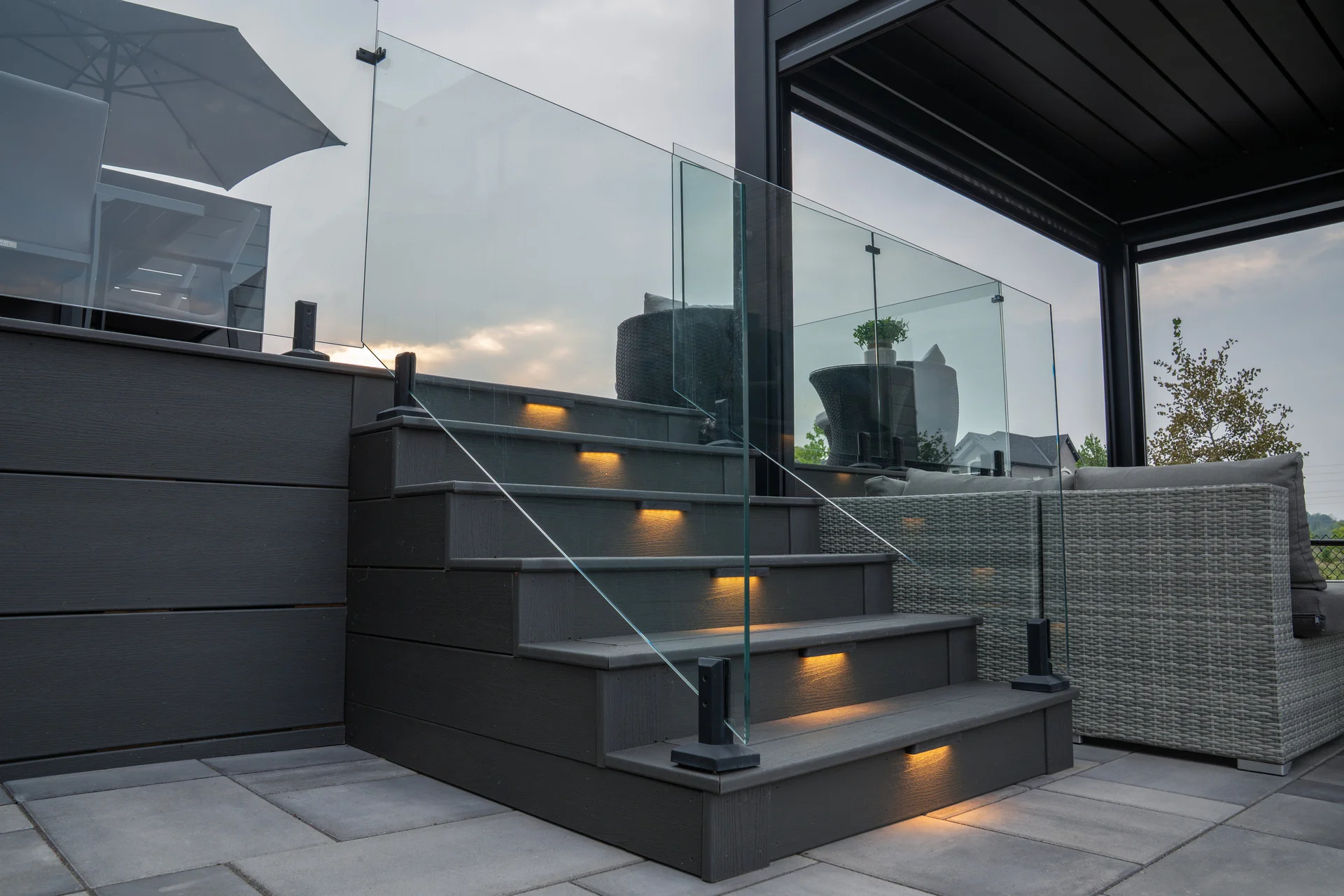
Straight railings are quicker to fabricate and install. On the other hand, railings with corners, stairs, elevation changes, or custom angles require additional cutting, polishing, and frames. Curved or non-linear designs often require custom fabrication and may be more expensive than complex railing designs or layouts.
6. Glass Type and Frame Finish
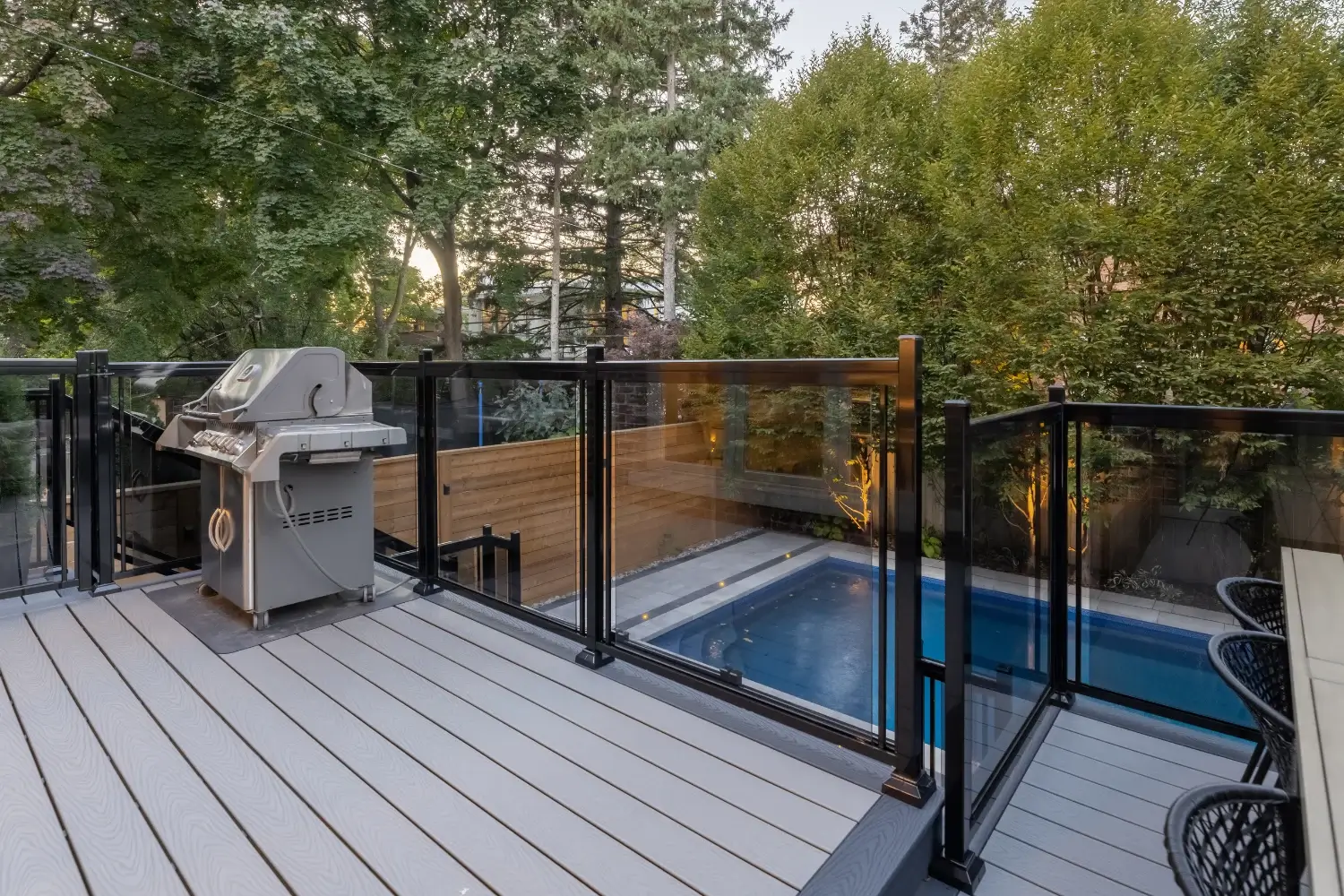
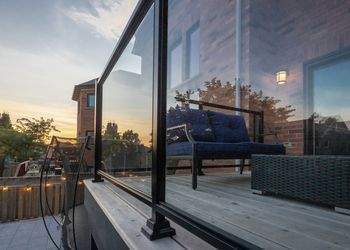
Glass thickness, tint, and frame finish directly affect the cost of railing system installation. For instance, the cost of clear glass is lower than that of frosted, tinted, or coloured or laminated glass panels. Hardware or frame finishes, such as black or brushed stainless steel, also affect the overall cost of the glass railing project.
7. Site Preparation needs
Some properties require preparation before glass railing installation, such as surface leveling or repairing old anchor points. These repairs ensure proper alignment and durability of your glass railing system. Extensive repairs can increase the total project costs.







 Project Estimate




 (647) 937-1023