The final cost of a snow-melting system comes down to a handful of factors: the surface being heated, the size of the driveway, drainage, whether an old driveway has to come out, and the type of controls you choose. Here’s how each one moves the number.
The Surface You Heat
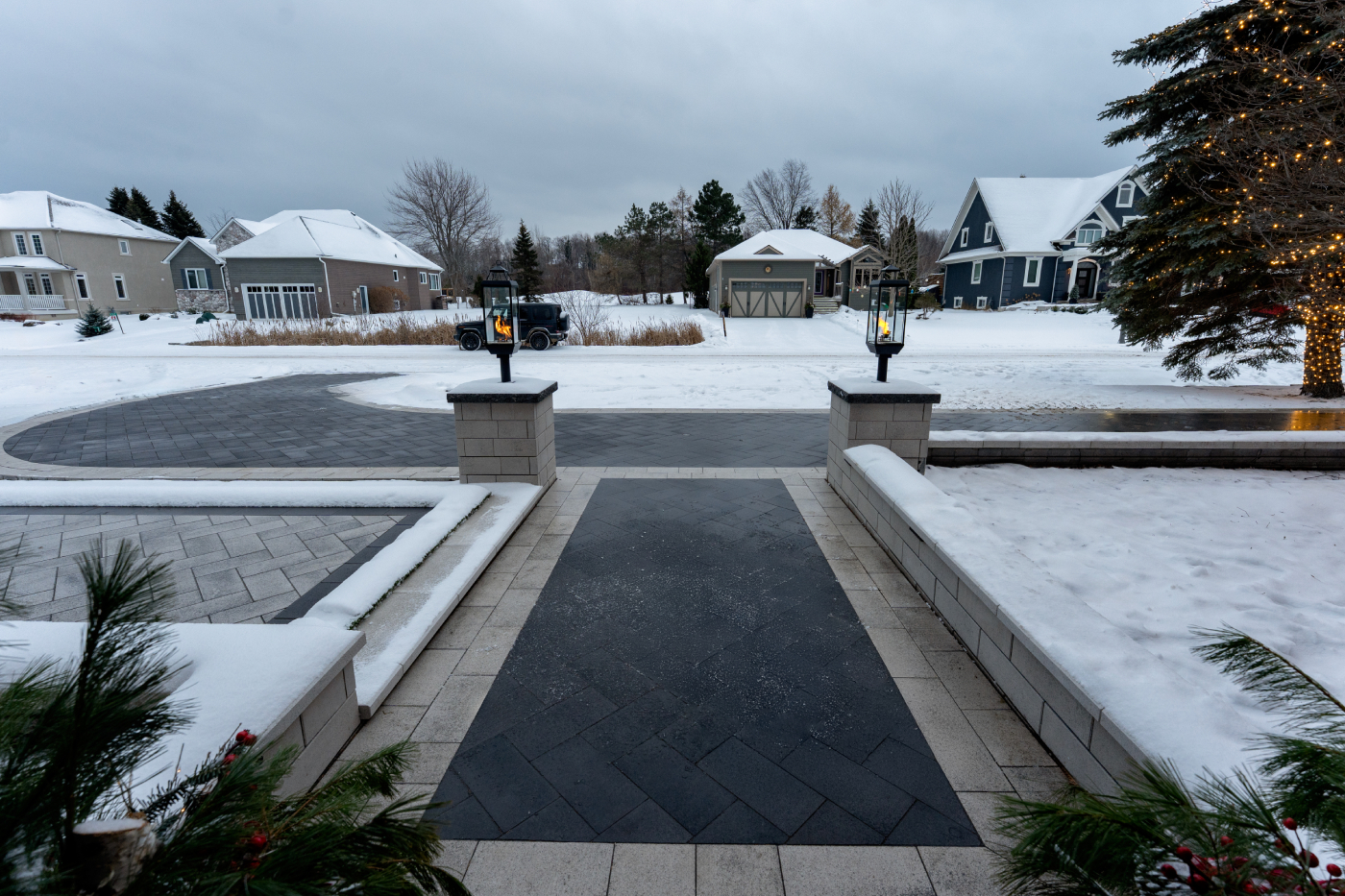
If your driveway is being rebuilt as part of the project, the surface material is a separate line item in addition to the heating system. Asphalt typically runs $12–$25 per square foot and installs quickly; concrete runs about $15–$30 and adds durability; interlocking stone or pavers are the premium option at $20–$50 per square foot because of the material and the labour to lay them. If we’re heating an existing sound surface, this cost may not apply at all.
Other Factors That Affect Your Quote
Size of the Driveway
Square footage is the biggest cost driver—more area means more heating elements, more materials, and more labour. A compact 12′ × 12′ pad (144 sq. ft.) typically costs $3,500–$7,900 for an electric system or $9,100–$13,100 for a hydronic system. A standard 24′ × 24′ two-car driveway (576 sq. ft.) generally ranges from $13,800–$31,700 for electric or $36,300–$52,400 for hydronic, depending on the system, surface, and site preparation.
Drainage and Water Management
Melted snow has to go somewhere. Without proper drainage, it can refreeze and damage the driveway or nearby landscaping, so most projects include a drainage plan — French drains, channel drains, or culvert piping. Soil conditions, slope, and water flow all factor into the final cost.
Removing the Old Driveway
If an existing driveway has to be removed first, demolition, debris haul-away, and disposal add to the project. Older driveways sometimes reveal base or drainage issues that need fixing before heating goes in — an upfront cost that pays off in a foundation built to last.




 Project Estimate


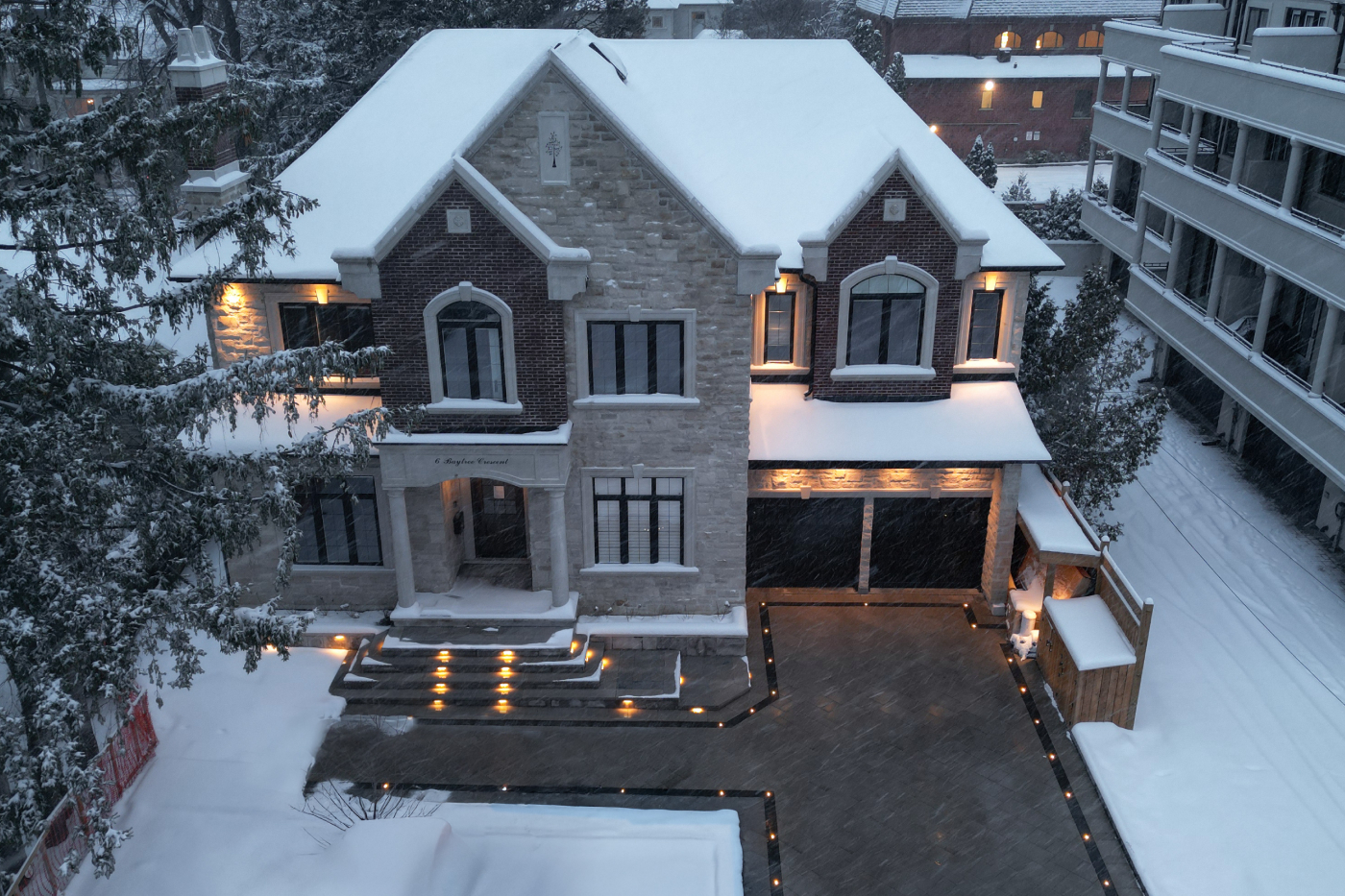
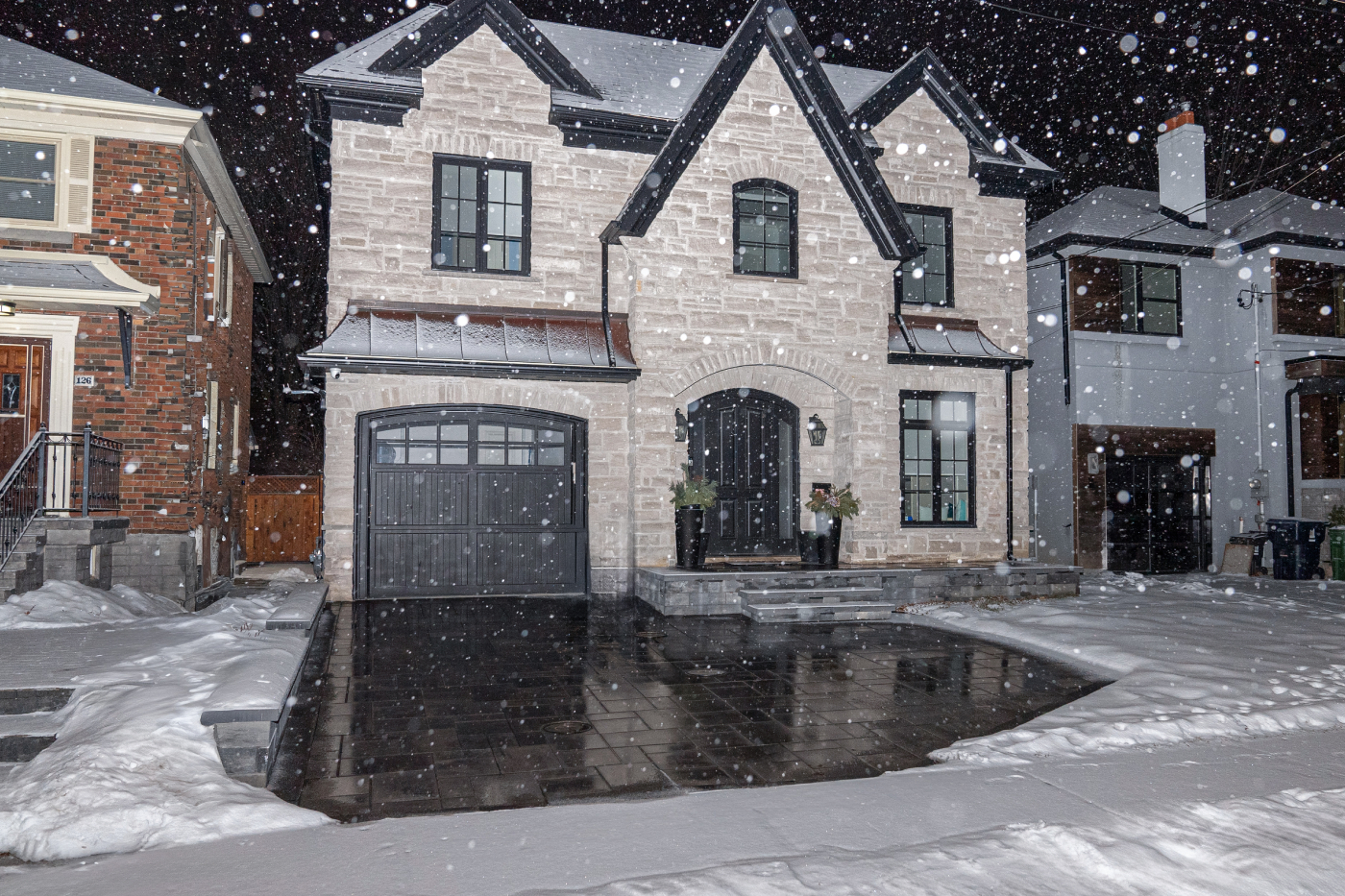
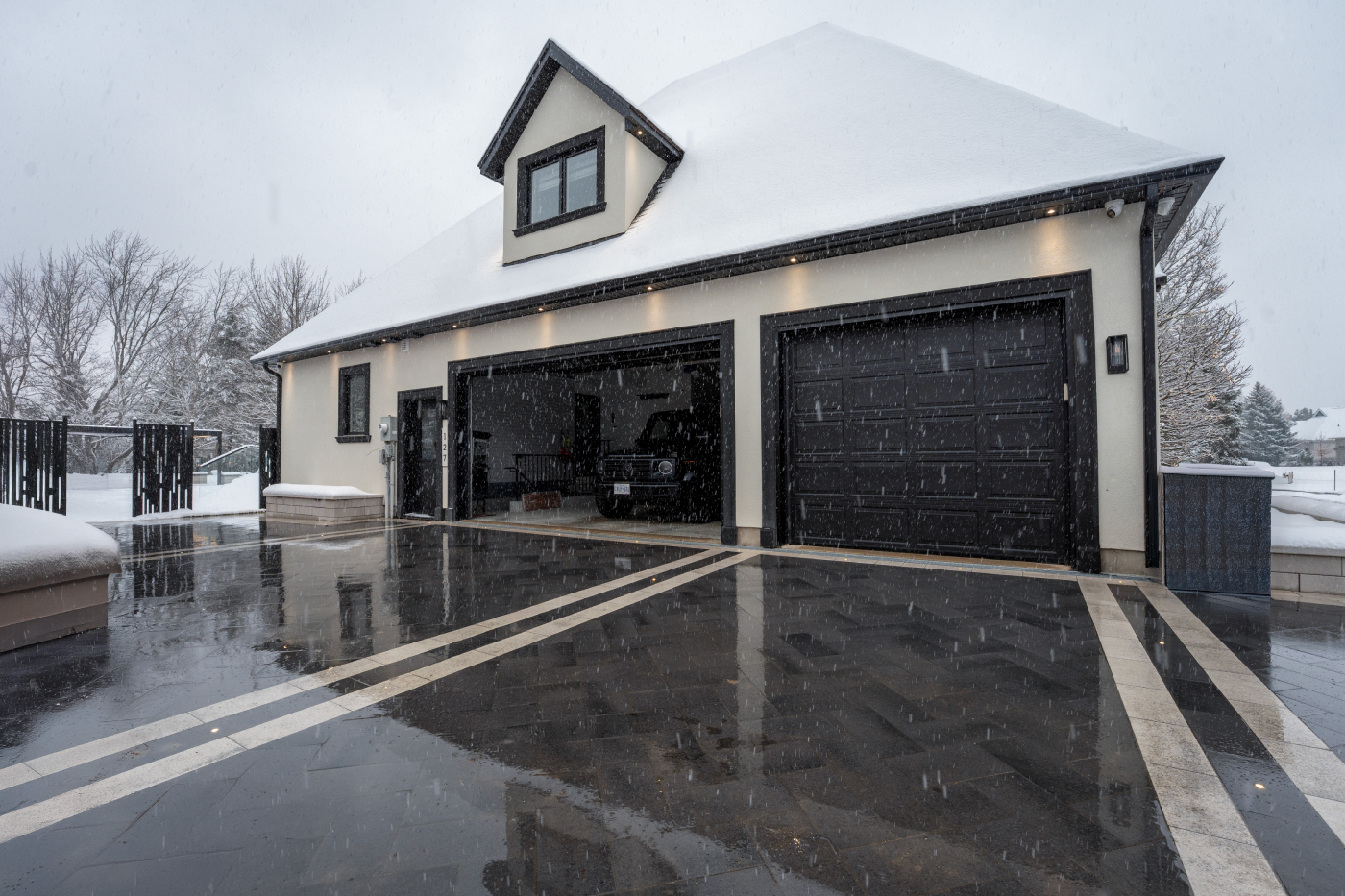
 View Our Gallery

 (647) 937-1023