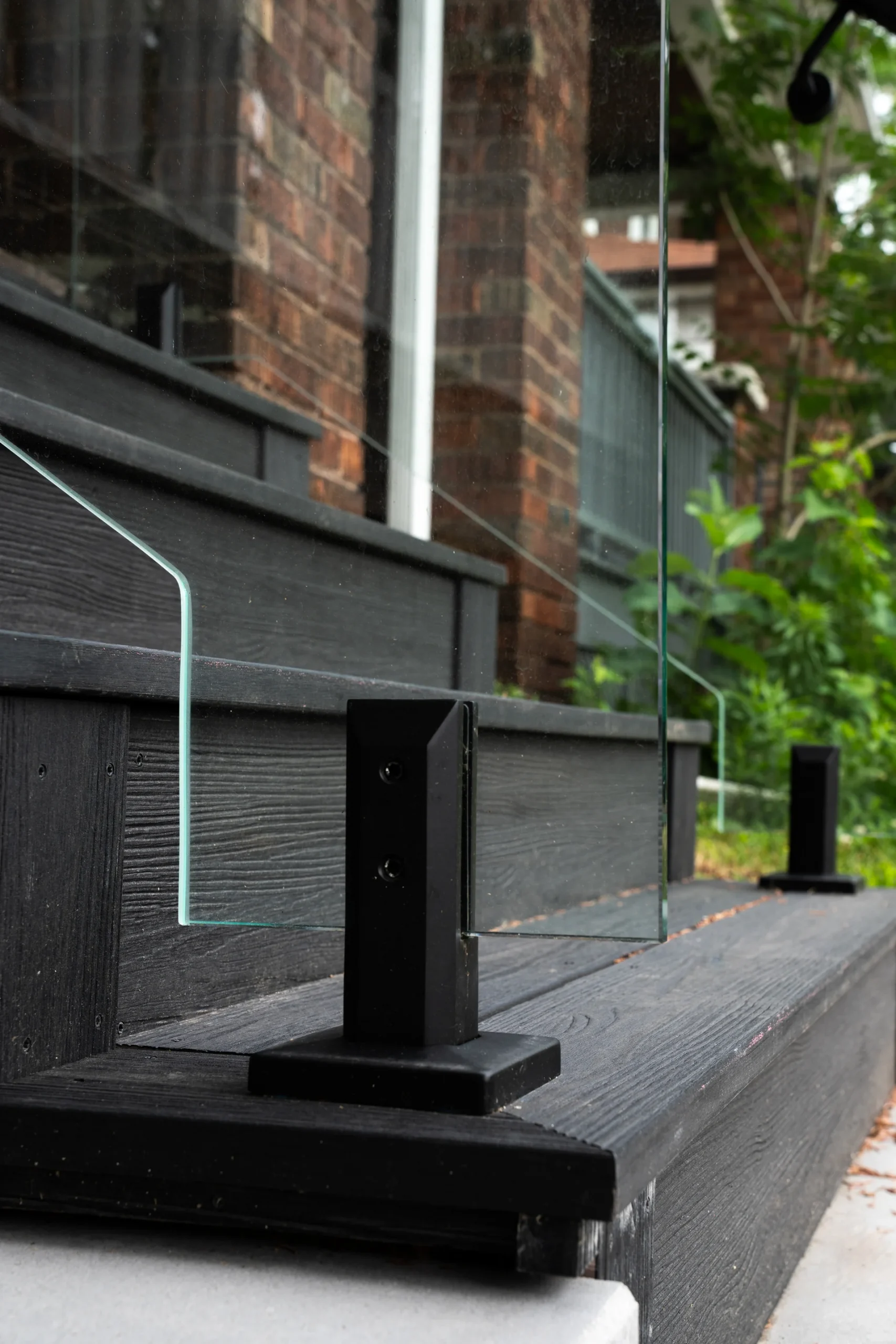
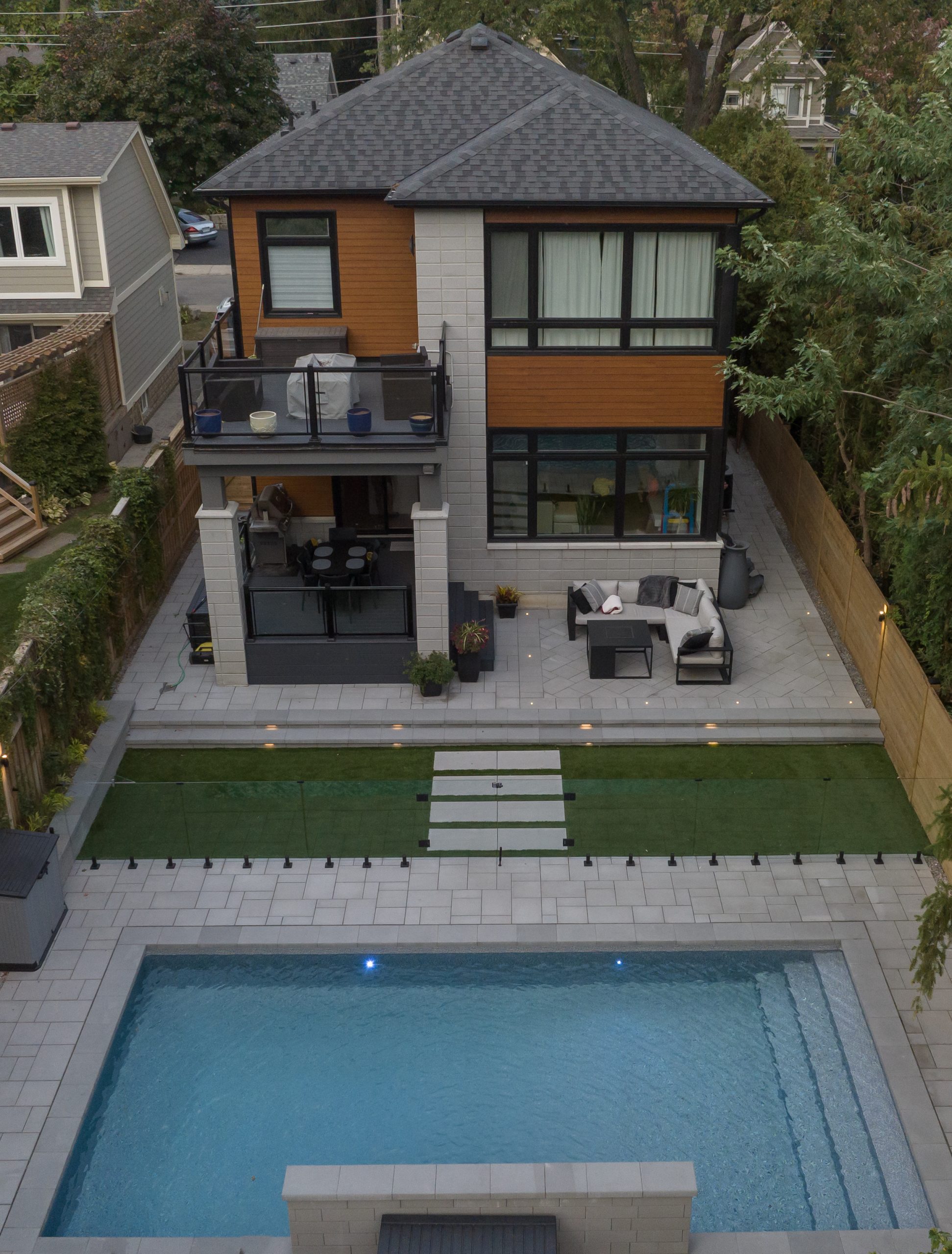
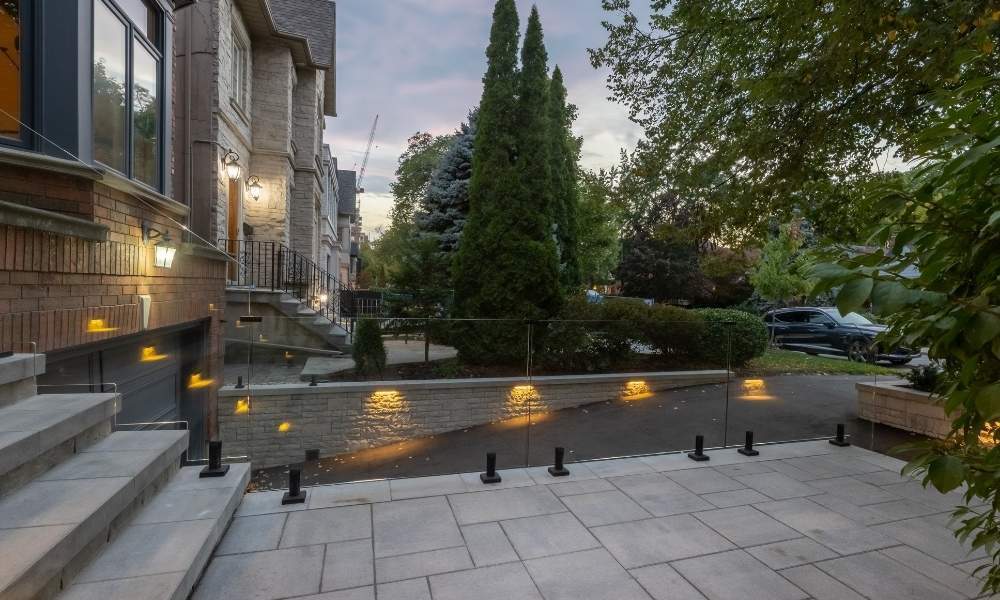
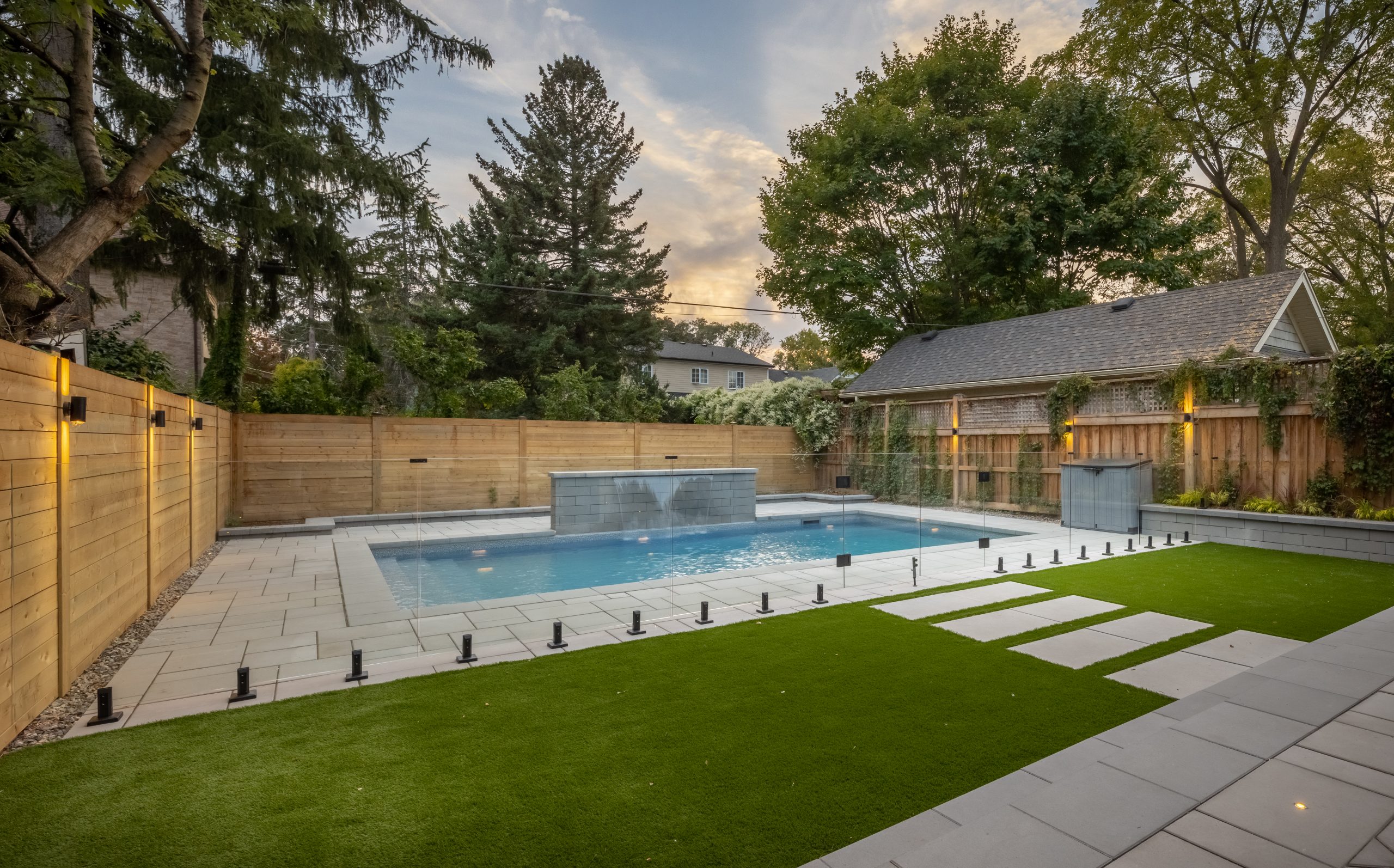
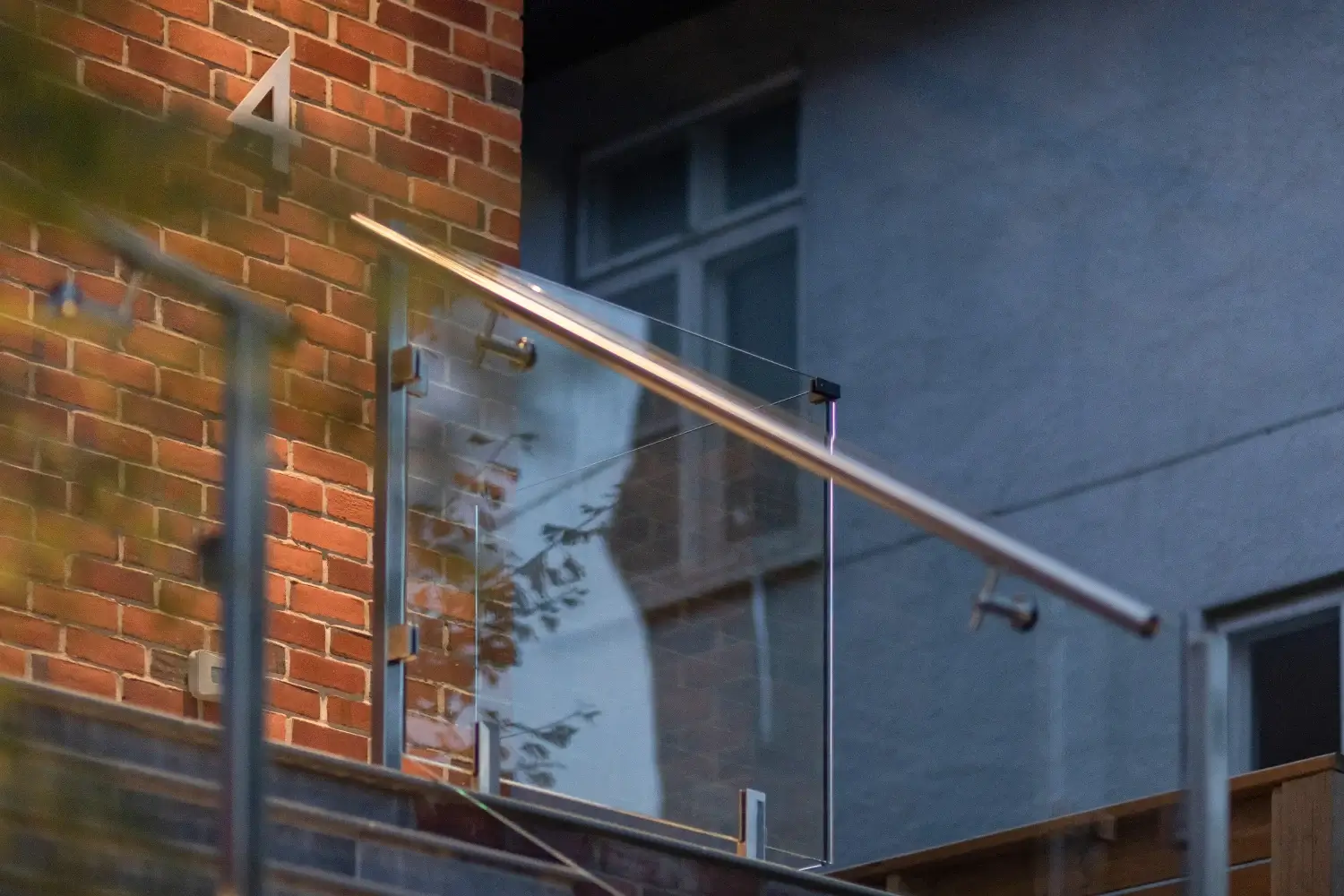
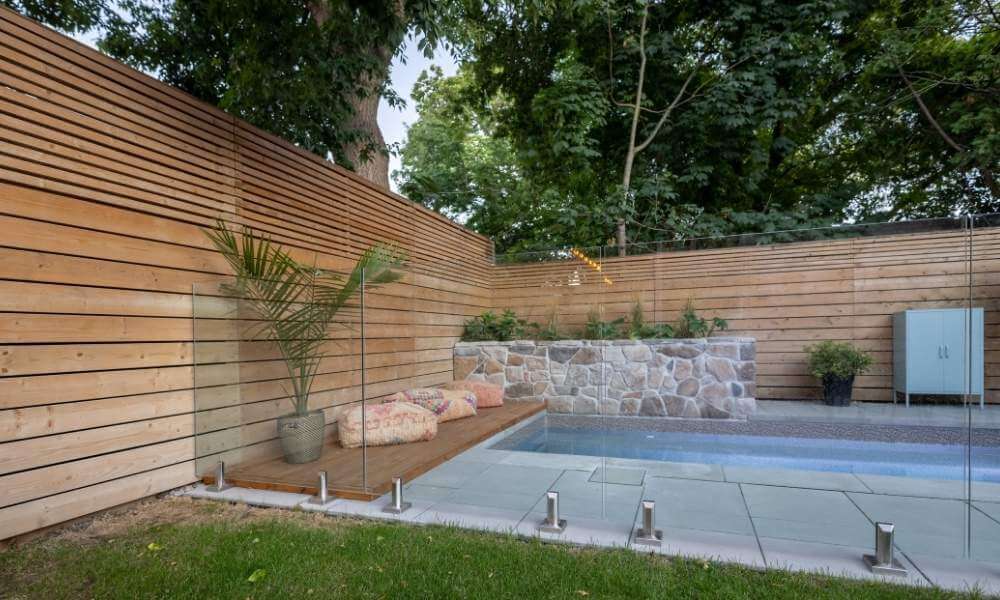
Framed and frameless glass railings help create a modern look, but they differ in structure, cost, and maintenance requirements. For instance, frameless systems use thick, tempered, or laminated glass panels secured with minimal hardware (side clamps or base shoe). This creates uninterrupted sightlines and maximum light.
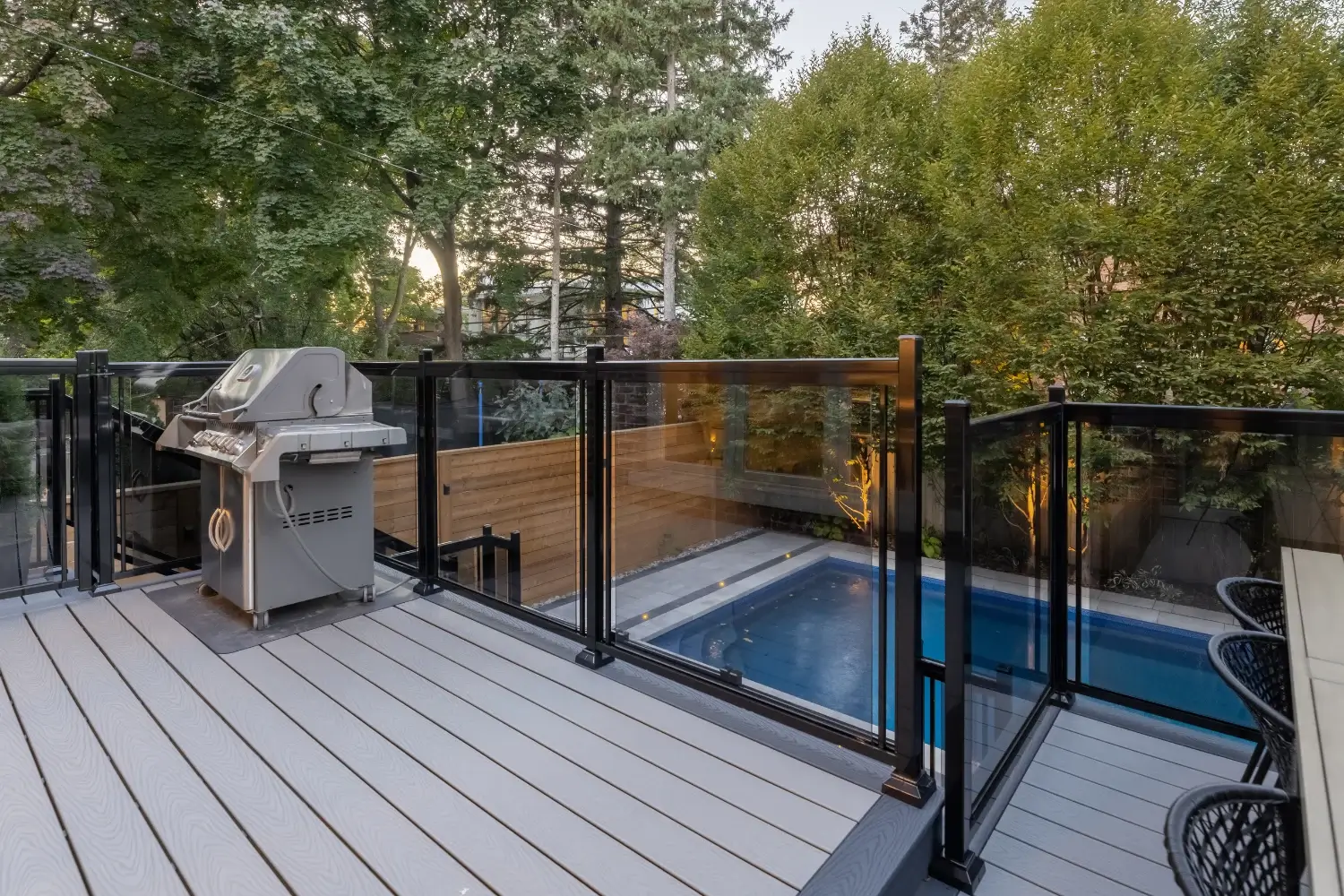
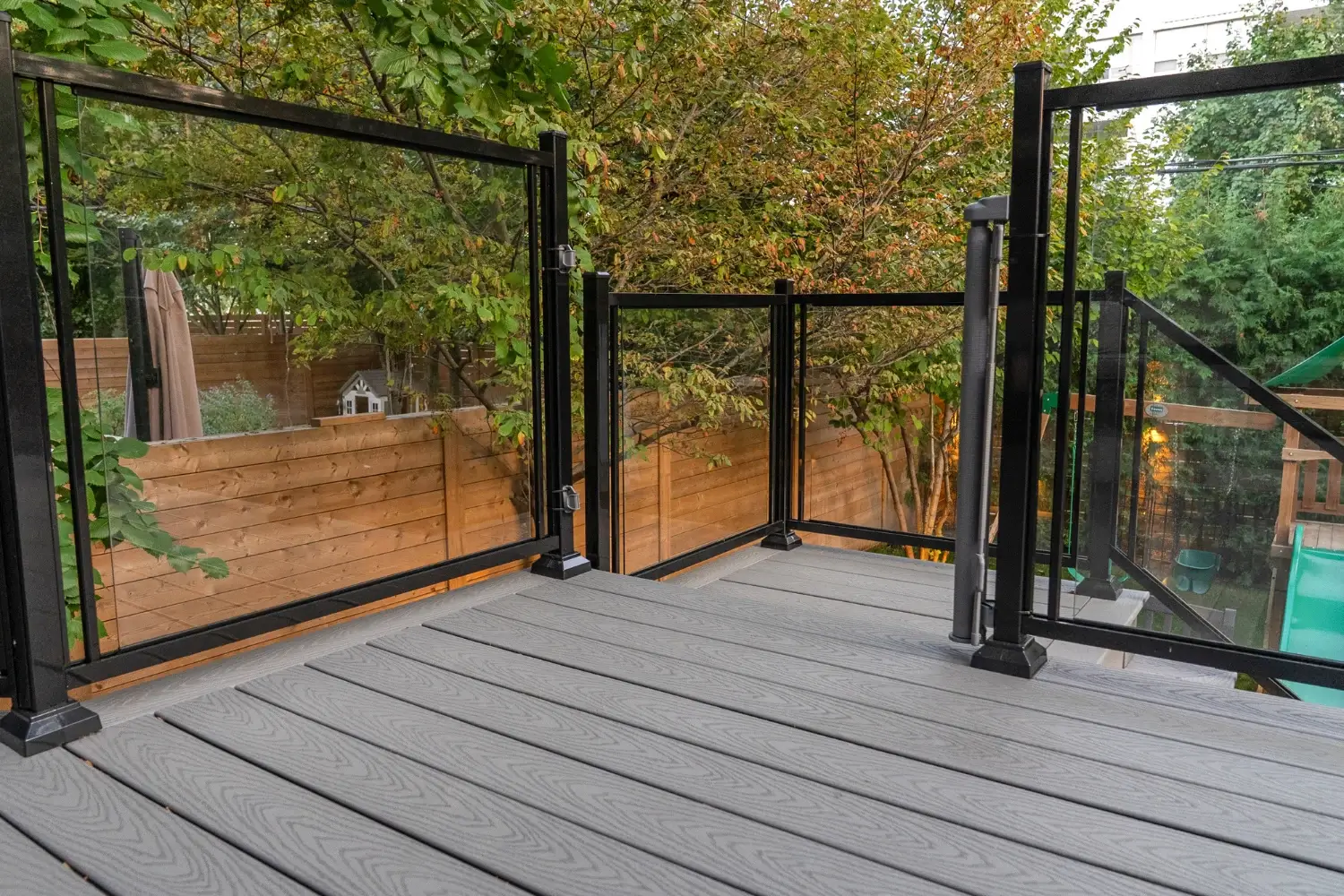
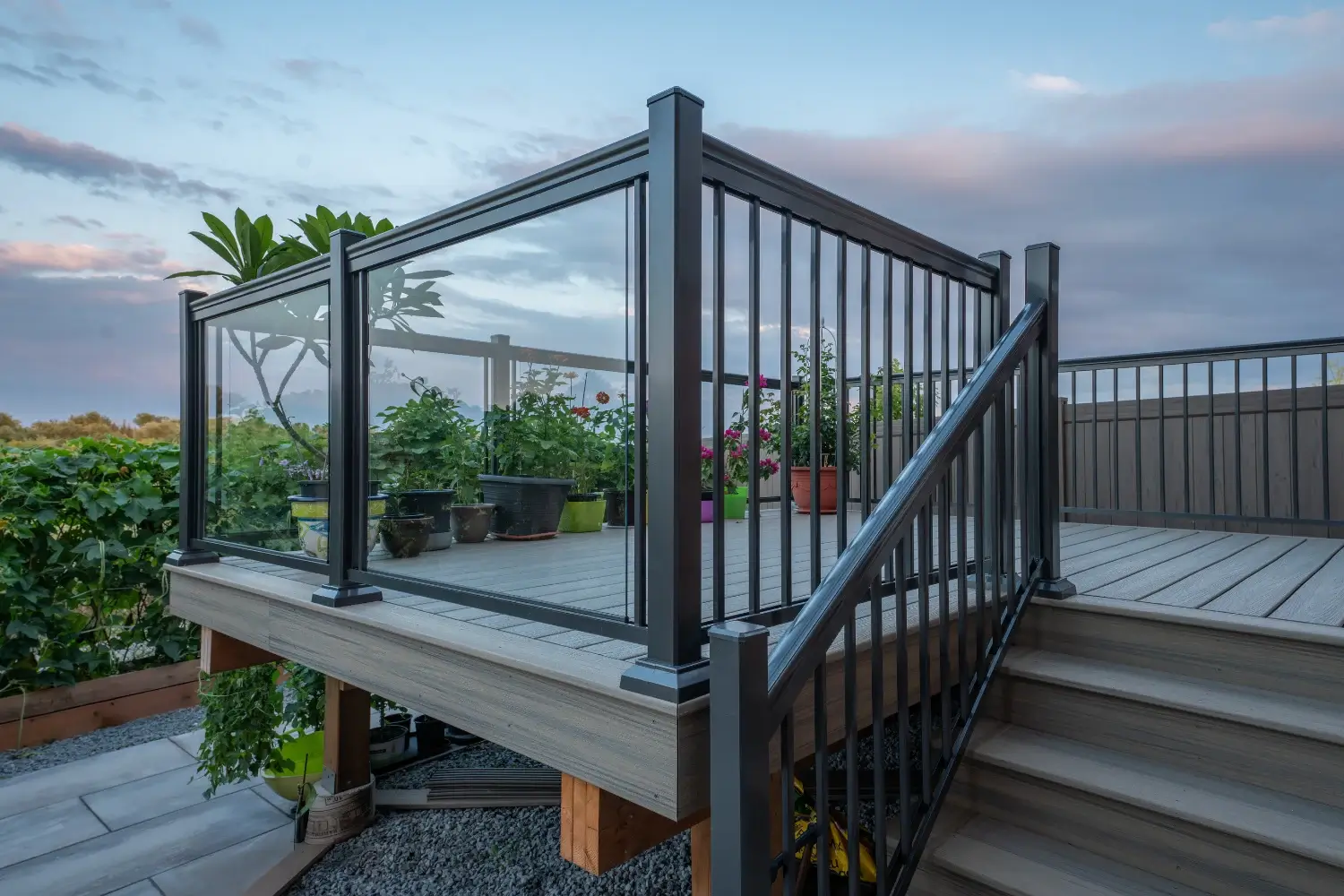
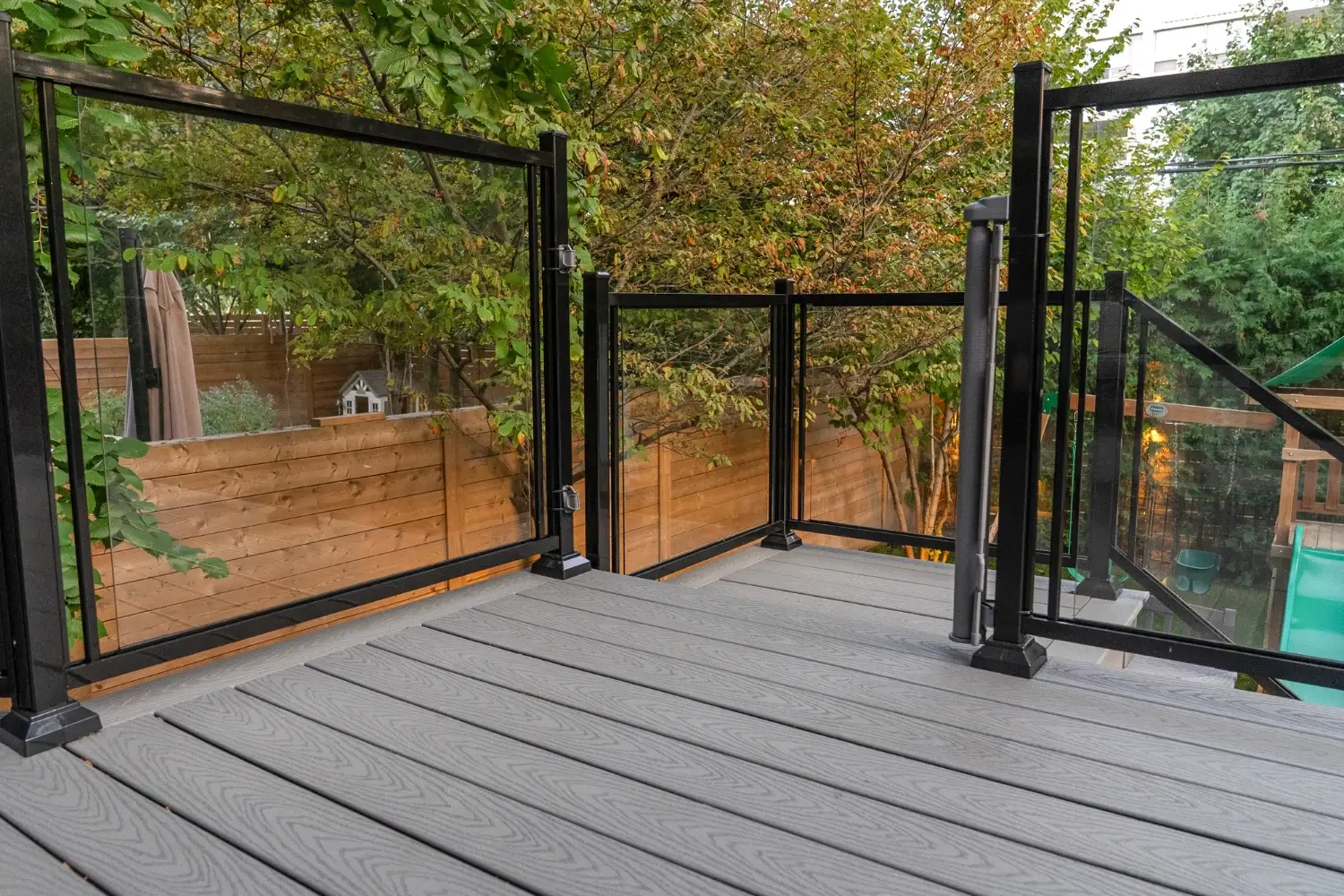
On the other hand, framed glass railings use metal posts, top rails, or full frames that support thinner glass panels. These glass railings provide structural support and are commonly found in high-traffic or commercial settings, such as shopping malls and other public areas. Note that both frameless and framed glass railings must meet Ontario building code standards.
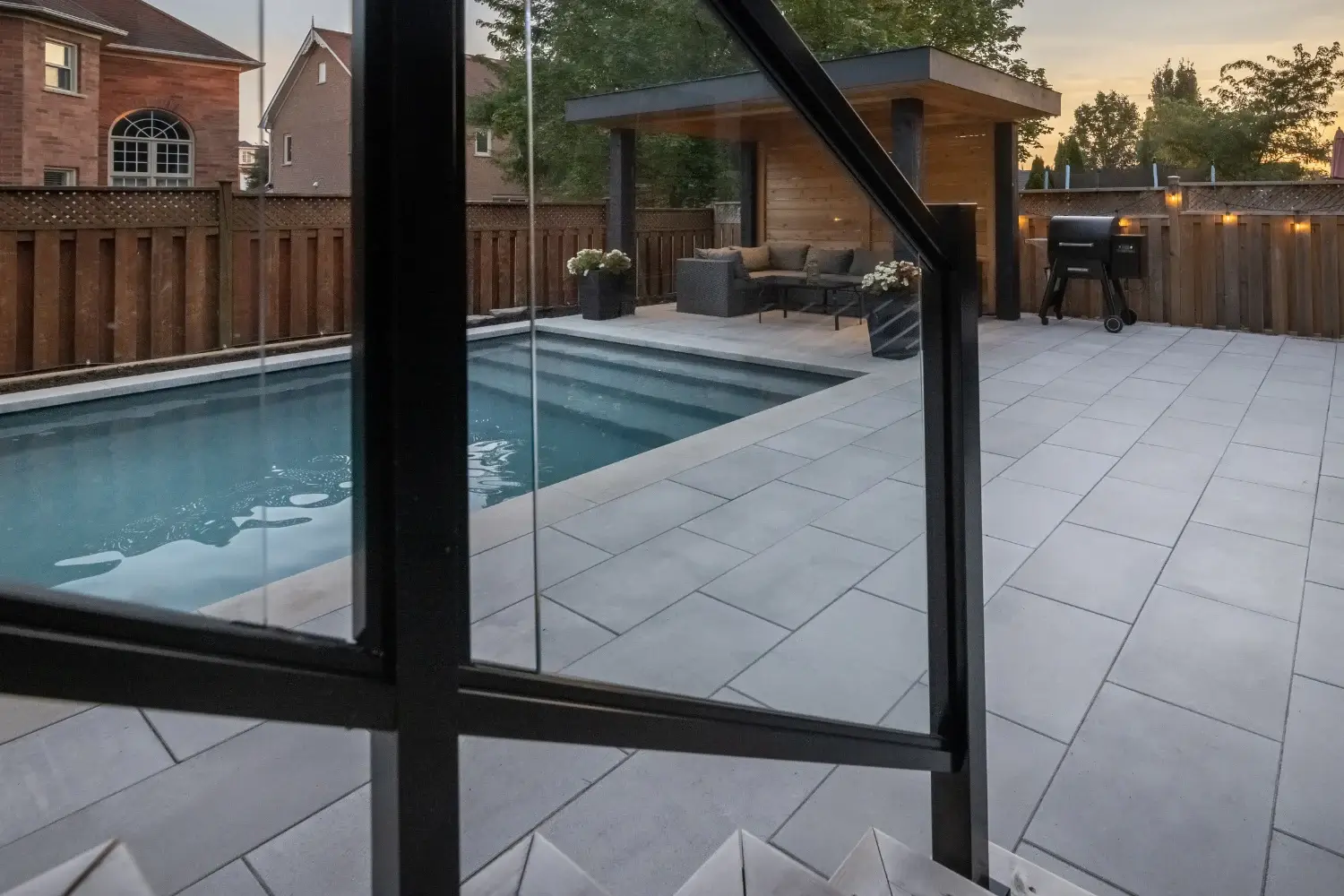
In terms of aesthetics and natural light, frameless railings are transparent, allowing daylight to flow seamlessly. This is ideal for decks, balconies, and pool edges where view and openness are important. Framed glass railings, on the other hand, have visible metal lines that can suit traditional or industrial designs while offering stronger visual boundaries.
When it comes to costs, frameless systems usually cost more upfront due to thicker glass, precision engineering, and higher labour for installation. Most framed glass railings are often associated with lower material costs and easy installations. However, they require routine maintenance because the metal frames may need repainting or corrosion checks.







 Project Estimate



 (647) 937-1023