


A new survey of Canadian homeowners from Action Home Services looks at which household tasks people most want to outsource, why they believe it would improve their lives, and what ultimately prevents them from doing so. The findings offer a revealing snapshot of how Canadians are balancing time, money, and expectations in modern home life.
Key Takeaways:
- 72% of Canadians say cost alone prevents them from outsourcing the household task that would most improve their lives.
- House cleaning (72%) and yard work (68%) top the list of tasks people most want to outsource.
- Gen Z homeowners report extreme stress at nearly triple the rate of Baby Boomers (28% vs. 11%) when managing everyday responsibilities.
- Homeowners spend 3-4 hours weekly on average tackling their most-hated task, with many saying the time saved would go toward family (32%) or simply resting (27%).
What’s Eating Up Your Free Time
Most Canadians aren’t overwhelmed by a single task. Instead, it’s the steady accumulation of chores and maintenance that weighs on them. Cleaning, yard work, repairs, errands, and seasonal upkeep tend to spread across evenings and weekends, leaving little time to fully recharge.
Weekends become maintenance sprints and evenings turn into catch-up sessions. When something gets skipped, it waits, adding to a constant backlog that follows people around even when they’re off the clock.
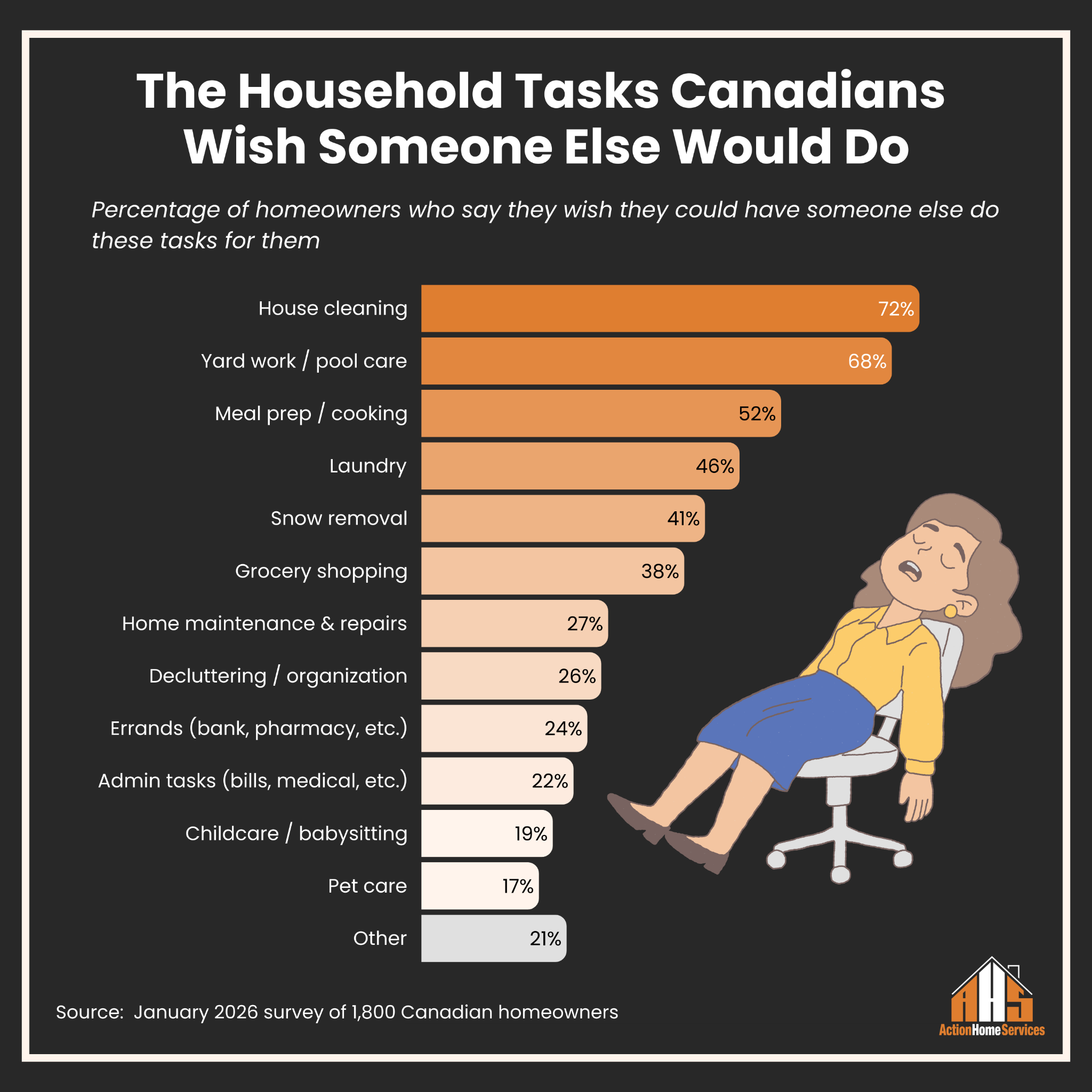
House cleaning tops the list of most consuming household duties at 72%, followed closely by yard work at 68%. Meal prep (52%), laundry (46%), and snow removal (41%) round out the top five. These are physically demanding, time-consuming jobs that consume entire weekends.
What’s Your Region’s Biggest Burden?
We may not all live in the same neck of the woods, but when it comes to household stress, Canadians are surprisingly aligned. Across every province, yard work or house cleaning ranks as the top task people wish they had help with. Whether it’s shoveling snow, mowing lawns, or keeping up with the never-ending cycle of cleaning, these jobs consistently rise to the top of the resentment list.
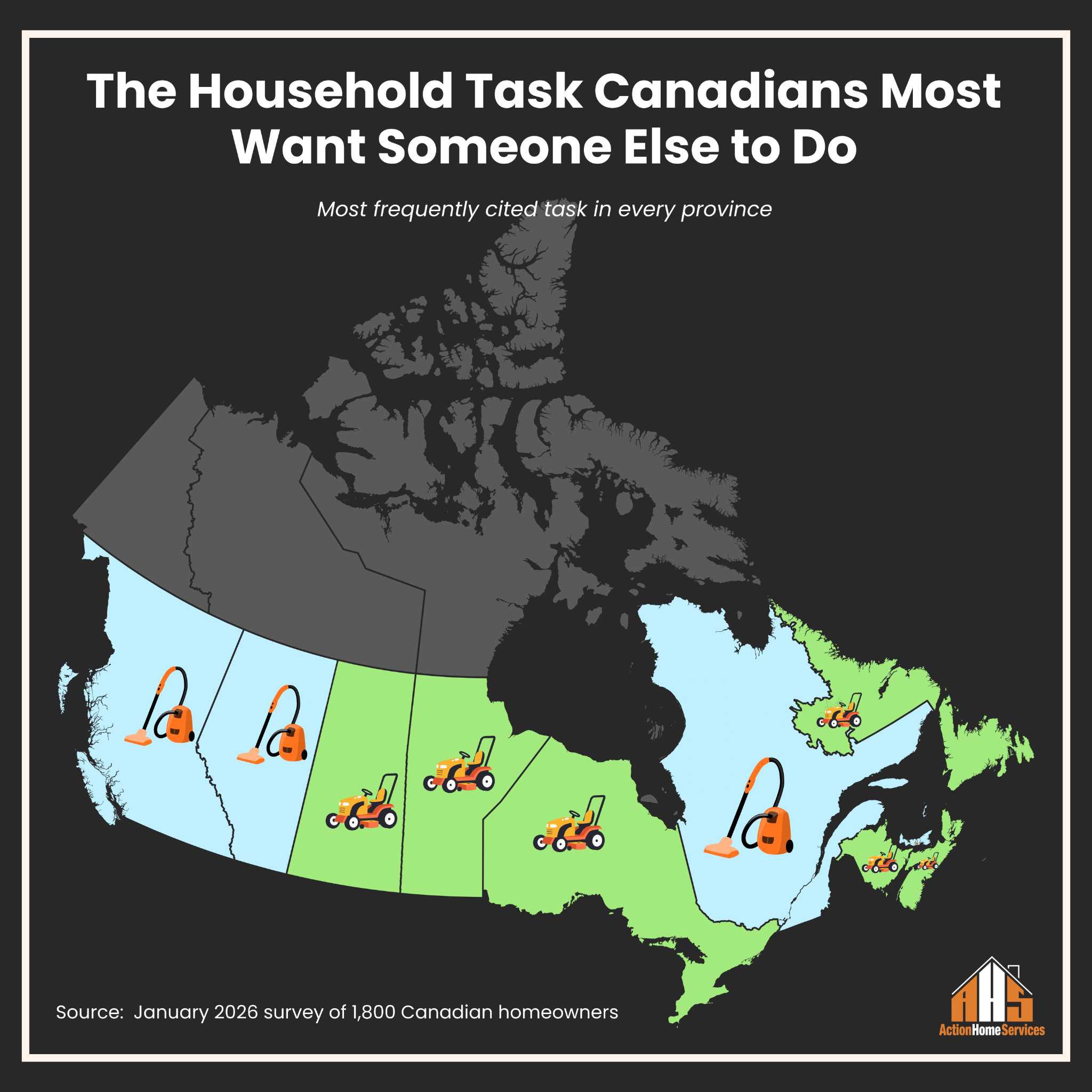
While each province shows its own mix of responsibilities, the overall pattern stays the same. Tasks that require frequent attention and can’t easily be postponed tend to generate the most frustration. No matter where Canadians live, the chores that take the most time and energy are the ones they most want help with, highlighting a shared experience of household strain that cuts across regional lines.
Why Help Feels Necessary, Not Optional
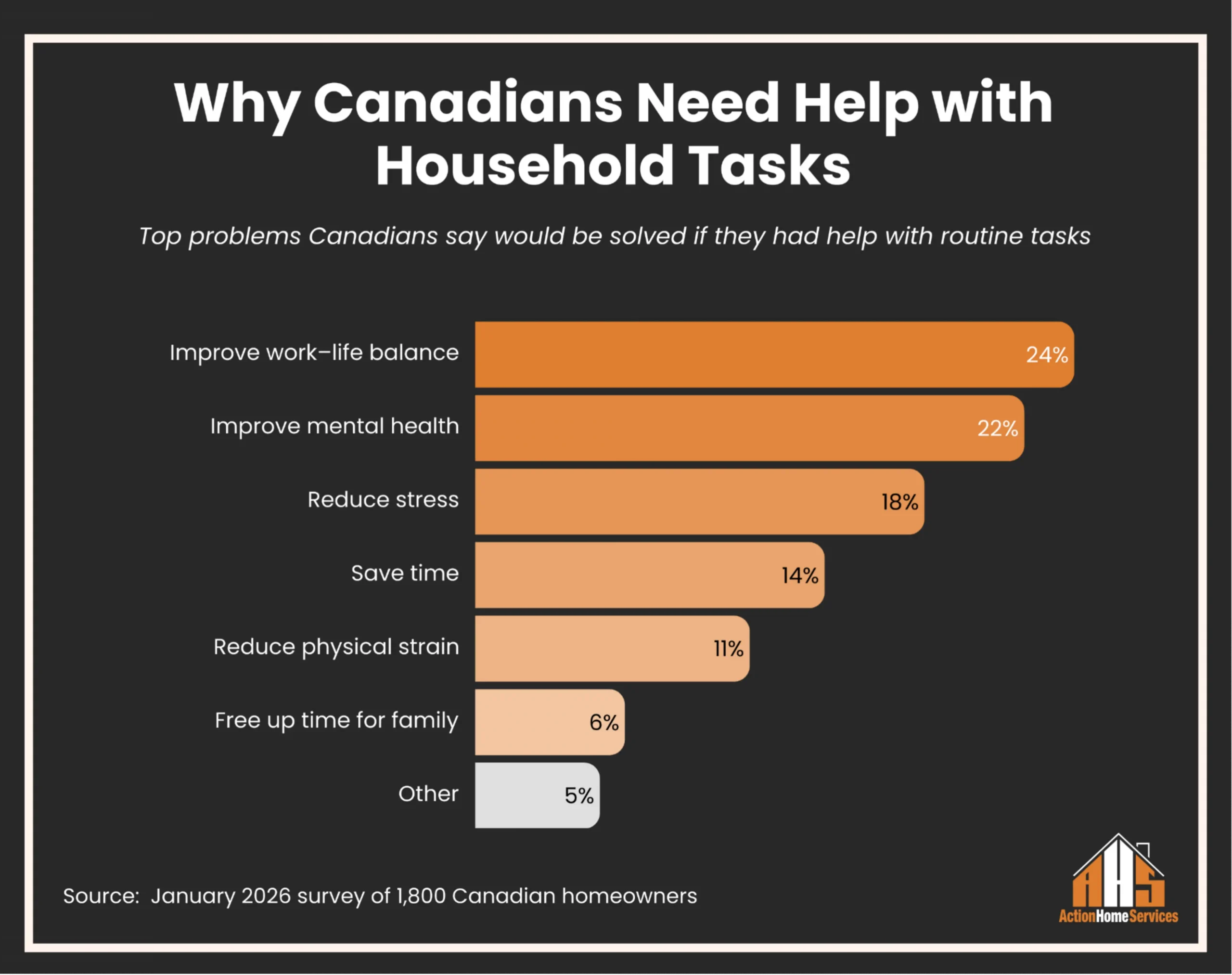
When asked what problem outsourcing would solve, 24% said work-life balance, 22% said mental health, and 18% cited stress reduction. Only 14% mentioned saving time as the primary benefit, indicating mental health matters more to Canadians than the hours saved.
If Help Would Change Everything, Why Don’t People Do It?
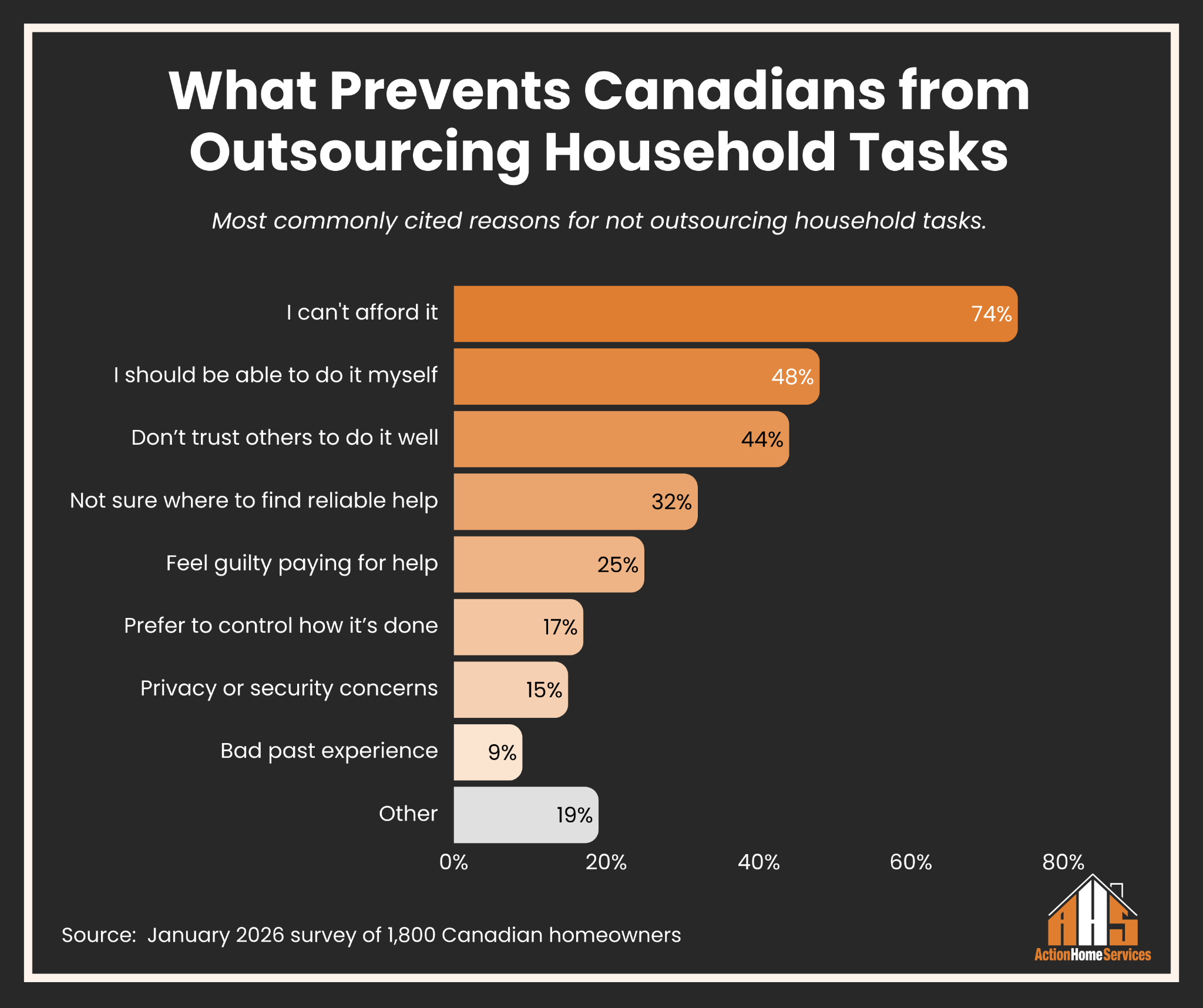
Despite clearly identifying tasks that would improve their lives, most Canadians still don’t outsource them. Cost is the dominant barrier at 74%. In the middle of a sustained cost-of-living squeeze, household help often feels irresponsible even when the stress cost is obvious.
But nearly half (48%) also believe they should be able to do it themselves. For many homeowners, especially older ones, self-sufficiency is tied to identity. Trust is another hurdle, with 44% not trusting others to do the task well, and a third unsure where to find reliable help.
Beyond cost and logistics, fear of judgment quietly shapes how Canadians think about outsourcing. While fewer respondents name it as their primary barrier, a significant portion still say guilt influences their decision to keep doing tasks themselves, even when those tasks add stress or take up scarce free time.
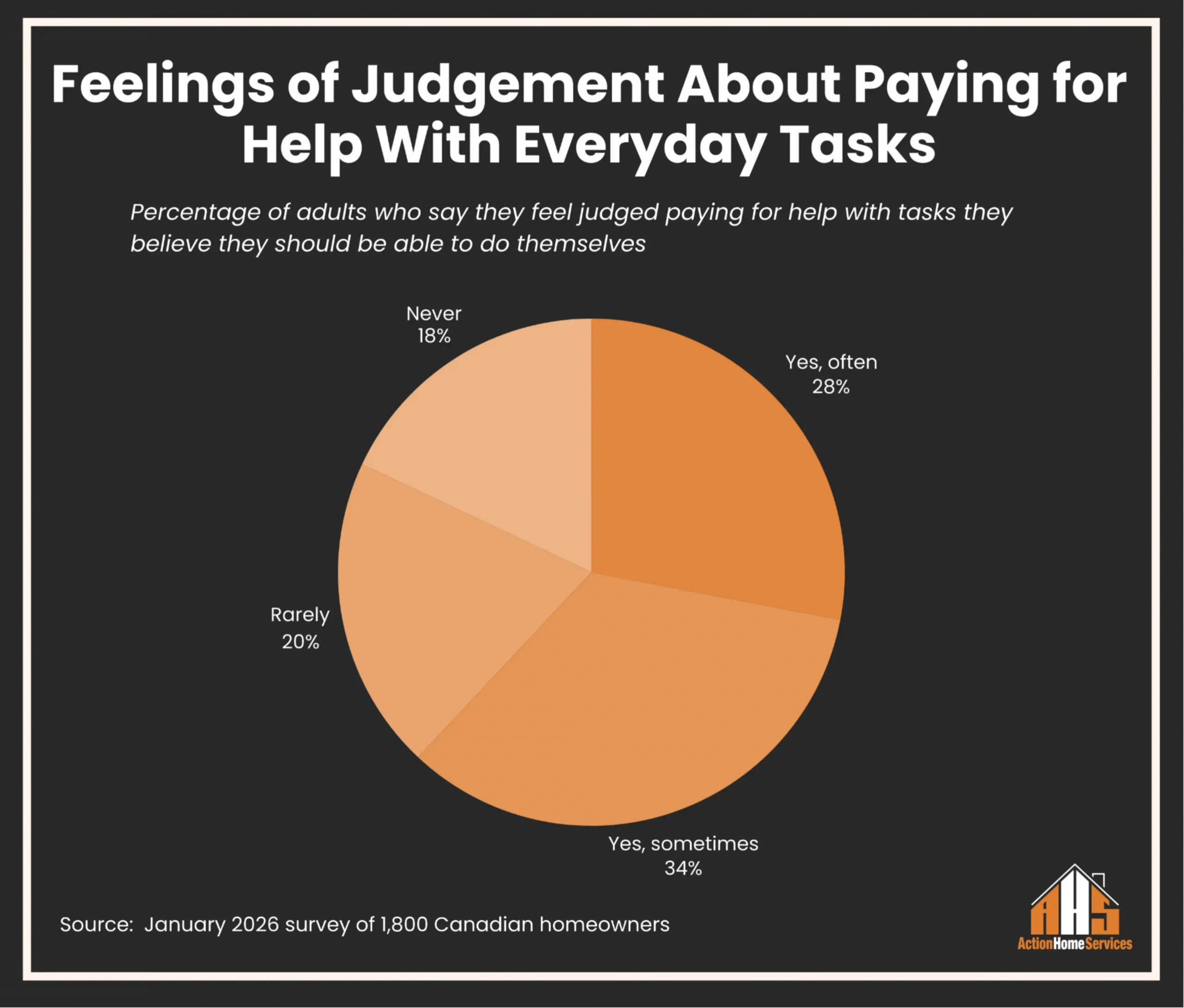
Some worry about how outsourcing might be perceived by family or peers, while others struggle with spending money on help when there are competing financial priorities. Guilt also shows up inside households, where suggesting outsourcing can feel like avoiding one’s share of the workload.
What Canadians Would Give Up to Buy Back Time
Even when outsourcing feels out of reach, many Canadians are already doing the mental math. If they could buy back time, what would they be willing to give up?
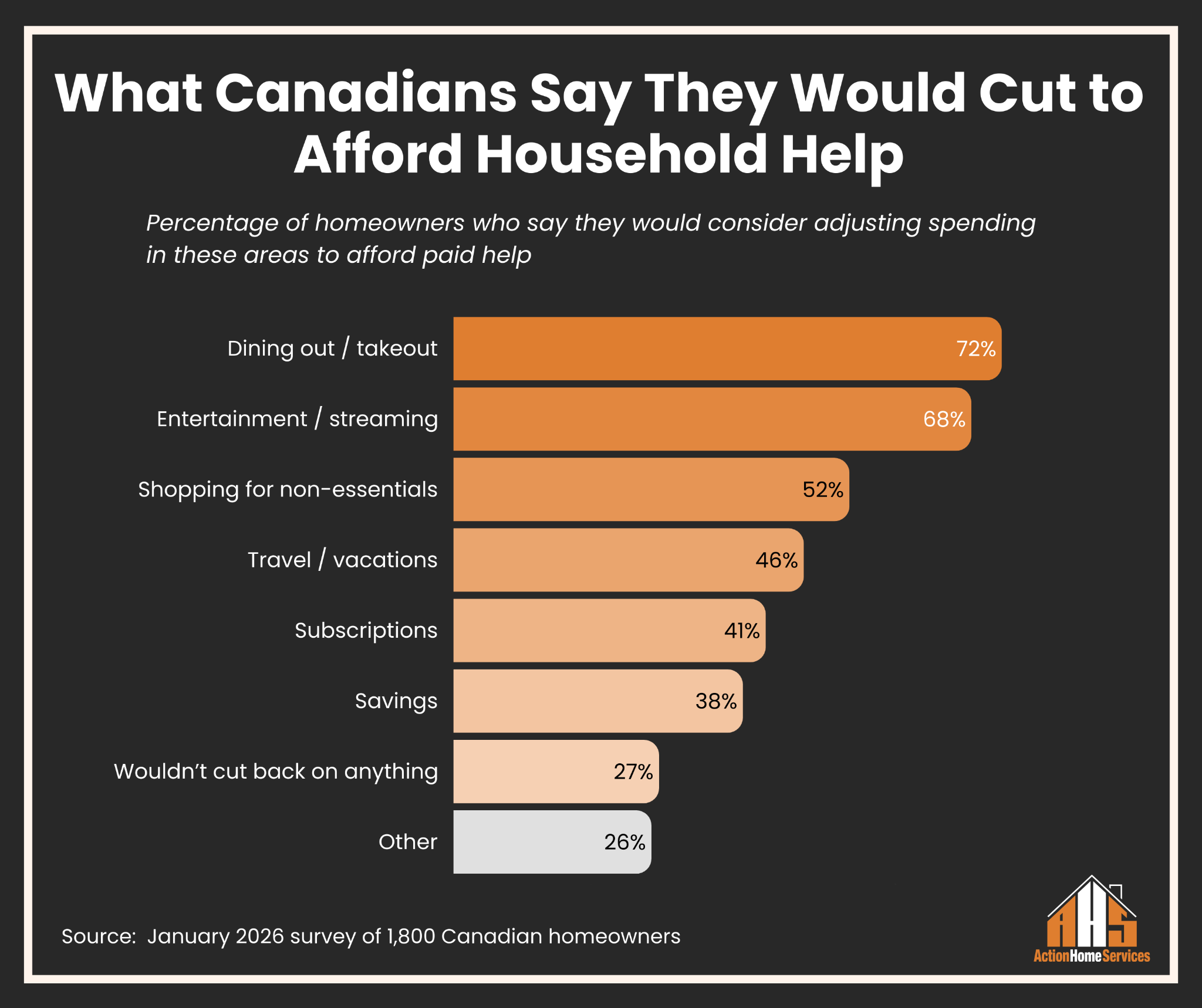
Dining out takes the biggest potential cut at 39%, followed by entertainment subscriptions (32%) and non-essential shopping (28%). Some would redirect vacation spending (21%) or tap into savings (14%).
Many Canadians say they would cut discretionary spending, but some have already done so due to rising grocery, housing, and utility costs. For those households, there’s simply less flexibility left to redirect toward paid help, no matter how appealing it sounds.
Stress That Turns Into Conflict
More than half of respondents report moderate to high stress related to household responsibilities. Parents and dual-income households report higher stress levels on average, reflecting the added complexity of balancing work and family demands.
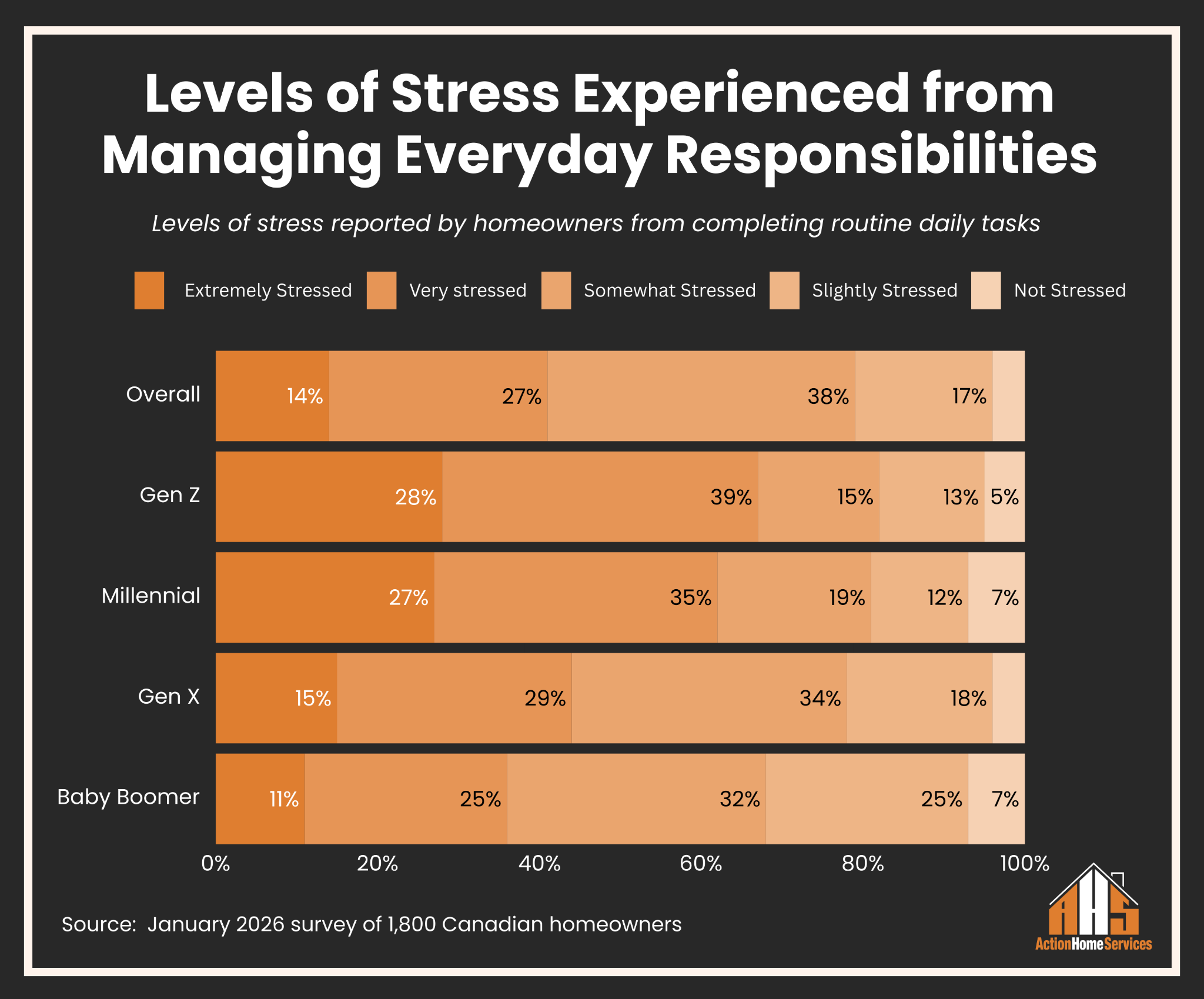
Among Gen Z homeowners, 28% report being extremely stressed about everyday responsibilities. Millennials aren’t far behind at 27%. Compare that to Gen X (15%) and Baby Boomers (11%), and younger homeowners say they face stress levels nearly three times higher.
Combine “extremely stressed” and “very stressed” responses, and 67% of Gen Z and 62% of Millennials fall into the high-stress category versus 36% of Baby Boomers. Younger Canadians are managing the same tasks while spending more on housing, carrying more debt, and navigating tighter budgets.
Household conflict rarely starts with raised voices. More often, it begins with a quiet imbalance that builds over time. One person notices the sink filling up. Another feels they’re always the one dealing with the yard. A repair gets delayed, then becomes a resentment.
When asked which routine tasks cause the most arguments at home, Canadians point to the same few pressure points again and again.
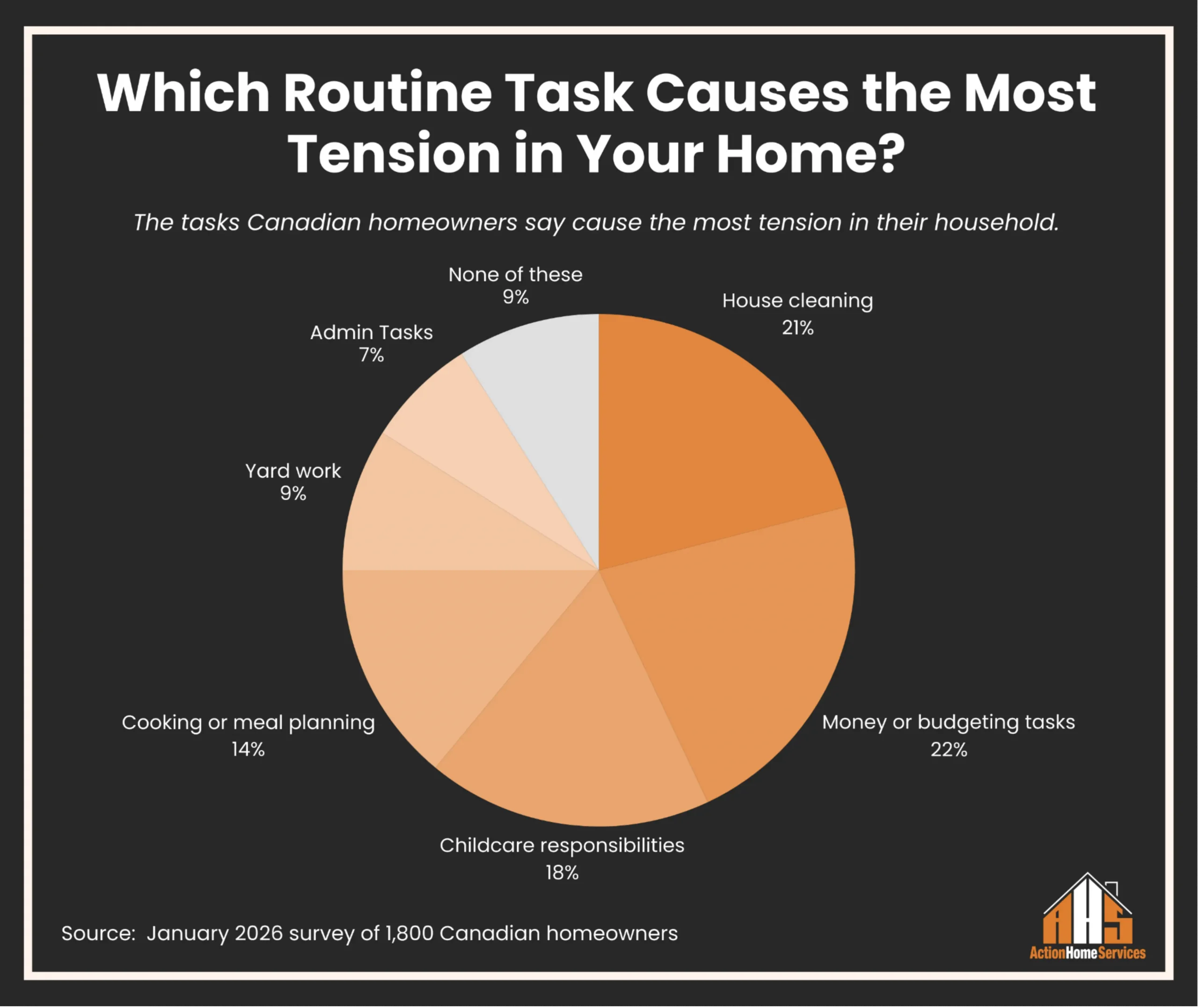
Cleaning sits at the top of the list, closely followed by yard work and home repairs. These tasks share a few key traits. They’re highly visible, never fully finished, and easy to interpret as signals of effort or neglect. Coming home to a dirty kitchen or overgrown lawn can make one member of a household feel like the others aren’t pulling their weight, even if that’s not necessarily true.
Life Beyond the To-Do List
Clearly, the never-ending household tasks that take the most time and effort are the ones people most want help with, yet many continue to manage them on their own. Cost, guilt, and habit all play a role, but the underlying tension comes back to time, and how little of it feels truly available. Meanwhile, external factors add onto the stress, as younger generations reported stress levels nearly triple those of Baby Boomers while also navigating higher housing costs, more debt, and tighter budgets.
While maintaining a clean home and tidy yard can feel like a continuous cycle, the reality is, it has to be done (primarily in order to stop it from becoming an even bigger problem).
Who does it depends on the household and circumstances, but there’s a paradox at play here: while many Canadians have the desire for a helping hand, there are often feelings of guilt or failure if they don’t do it themselves.
Luckily, there are ways to speed up certain household chores without the cost of external support. If you’re a fan of social media, you’ll find endless videos on decluttering methods – including the popular Basket Method. Or, if you’re more of a bookworm, learning about Marie Kondo’s KonMari Method might be more up your alley.
Any time shaved off is a bonus, giving you more time to spend with the people you love, or doing the things you actually enjoy.
Methodology
This study is based on a survey of 1,800 Canadian homeowners conducted in January 2026. Respondents had an average age of 42.2 years. The sample was 54 percent female, 45 percent male, and 1 percent gender non-binary. Participants self-reported household responsibilities, stress levels, outsourcing behavior, willingness to pay for help, household conflict, and perceived barriers to outsourcing.
Fair Use
You’re welcome to share or reference this data for non-commercial purposes. Please include a link back to this page so readers can explore the full findings and methodology.